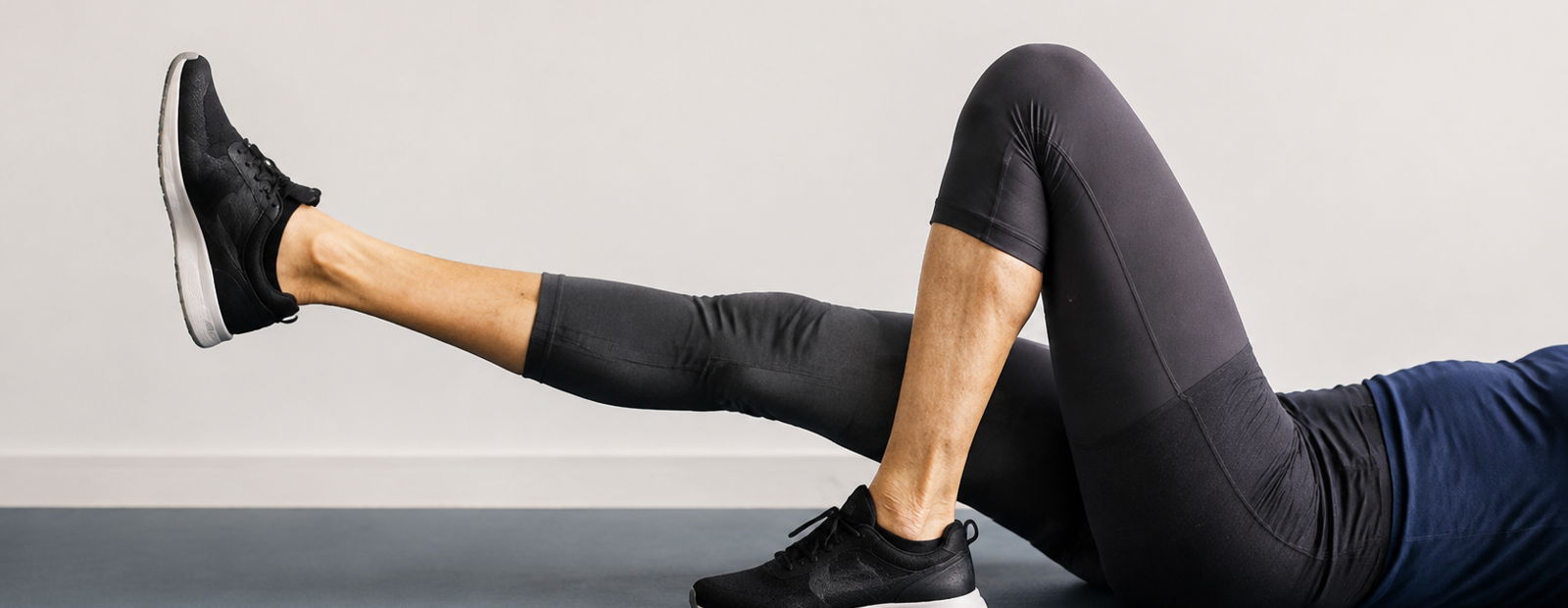
A Video, a Quad Set, and a Question About What to Skip
Helen (a pseudonym) had been working on her knee for several months.
Her Squat Load Tolerance has climbed steadily, the swelling that used to limit her motion has largely resolved, and her knee extension range has returned.
Then she watched a YouTube video listing 11 activities for people with knee arthritis to avoid.
One of the exercises the physical therapist in the video cautioned against was Quad Sets.
Helen asked me whether she could keep her quads relaxed during Quad Sets and treat the exercise purely as a way to activate her glutes.
She also asked whether she should replace Quad Sets now that her knee extension had come back.
Both questions trace back to the same underlying idea, one that shows up throughout that video and a lot of mainstream knee arthritis advice.
It’s the idea that the real problem causing knee pain is a muscle imbalance between overworked quads and underworked glutes.
And that the fix is to lean harder on the glutes while minimizing quad use.
It's not an unreasonable idea.
But it's incomplete.
What a Quad Set Is Actually Doing
A Quad Set isn't a muscle-building exercise in the conventional sense.
I've written a full breakdown of what a Quad Set is actually doing for your knee.
Here’s the short version:
Quad Sets work by calming irritation inside the joint and reversing arthrogenic muscle inhibition (the reason a swollen knee won't let the quad fire at full strength even when the muscle itself is fine).
The correct sequence for a Quad Set is core engagement, then squeezing your hip (glute) muscles together, before finally gently contracting the muscles on the front of your thighs.
That last piece isn't optional.
It's the point.
Where the "Avoid Your Quads" Advice Comes From, and Where It Breaks Down
The logic in video that Helen watched isn't baseless.
Weak glutes and hip muscles can leave the knee absorbing force it shouldn't have to carry.
And that link between muscle strength and knee osteoarthritis symptoms is well established.
But strength in a muscle around the joint is not the same thing as strength inside the joint.
I've written about this distinction in The Difference Between Muscle Strength and Knee Joint Strength.
Here's what the research on hip and glute strengthening specifically shows:
A randomized controlled trial by Bennell and colleagues put 89 people with medial knee osteoarthritis through a 12-week hip abductor and adductor strengthening program and measured the actual load moving through the knee during walking.
Symptoms and function improved.
But hip muscle strengthening did not decrease the load occurring inside the knee.
That finding has held up.
In a more recent 2022 systematic review and meta-analysis of hip abductor strengthening in knee osteoarthritis found the same pattern.
The same review notes that quadriceps strengthening, by contrast, is associated with reduced knee joint load and a protective effect on the joint itself, the opposite of what "avoid your quads" advice would predict.
In other words, glute strengthening tends to help people feel better.
It doesn't reliably change how much force is actually moving through the knee joint.
That's a meaningful difference if the goal is building a knee that can handle more over time, not just one that hurts less today.
The Inside Out Knee Health Approach
This is why sequence matters more than any single muscle group.
Phase 1: Improve the internal joint environment, synovial fluid quality and reduced irritation.
Phase 2: Build Knee Joint Strength and Squat Load Tolerance through progressive, pain-free loading.
Phase 3: Strengthen the external structures, including the glutes, and return to full function.
Glute work is real and it belongs in this framework.
It just doesn’t replace improving the internal joint environment.
Nor does it substitute for building the knee joint's own capacity.
What This Looks Like in Practice
For someone in Helen's position – knee extension restored and knee swelling resolved – it's tempting to treat that as a finish line for Quad Sets.
It usually isn't.
Knee extension (straightening) typically returns because Quad Sets improve synovial fluid quality, and that thicker, healthier fluid takes up less space in the joint.
This is very often the actual mechanical barrier to straightening the knee.
Pain-free extension is a sign the fluid has changed, not a sign the exercise is done.
The practical next step isn't choosing a new isolated exercise, and it isn't dropping Quad Sets either.
It's continuing them alongside progressive loading, such as on a Variable Incline Plane (VIP), which measures the actual percentage of bodyweight her knee can accept in a squat without pain.
Phase 2 loading often introduces some irritation as Squat Load Tolerance climbs, and continuing Quad Sets through that stretch helps that irritation resolve faster.
This keeps progress steadier and lowers the odds of a setback.
That's a different kind of decision than "which muscle should I feel working."
It's a direct measurement of what the joint itself can currently handle, paired with the tool that keeps the internal environment settled while that capacity is built.
This improvement in capacity allows her to withstand forces from daily activities like stairs and walks in her hilly neighborhood to fitness activities like lifting weights.
Mistakes People Make With This Advice
Mistake 1: Treating "Avoid the Quads" as a Long-Term Strategy
You cannot get through an ordinary day without using your quadriceps. Sitting down and standing up, climbing stairs, getting out of a car, all of it requires the muscles on the front of your thighs to straighten your knees. A long-term avoidance strategy isn't a plan for a stronger knee. It's a plan for a knee that stays fragile because it's never asked to do its job.
Mistake 2: Assuming Glute Strength Reduces Knee Joint Load
The research doesn't consistently support this. Hip strengthening has repeatedly been shown to improve pain and function without measurably reducing the load moving through the knee joint. The benefit is real, but it isn't coming from the mechanism most people assume.
Mistake 3: Confusing Symptom Relief With a Change Inside the Knee Joint
Feeling better is not the same as your knee's internal joint environment being different. Glute work can quiet symptoms without touching synovial fluid quality, joint irritation, or Squat Load Tolerance, the factors that actually determine how much your knee can handle tomorrow, not just how it feels today.
The Reframing Insight
The video Helen watched isn't wrong that muscle patterns around the knee matter.
It's wrong about what fixing them accomplishes.
Redirecting force away from the knee isn't the same as making the knee more capable of carrying it.
You can build glutes strong enough to spare your knee some pressure during a squat, and still have a joint that hasn't rebuilt its capacity to handle a hike, a flight of stairs, or a long day on your feet.
And you can't spend a lifetime avoiding the muscle group that lets you stand up from a chair.
At some point, the knee has to be built to handle the load your life actually requires, not working around it.
FAQs (Frequently Asked Questions)
Can strengthening my glutes fix my knee arthritis?
Glute strengthening can improve alignment and reduce some of the force reaching the knee, and it's associated with real improvements in pain and function. But it doesn't address the internal joint environment, synovial fluid quality and irritation, that determines how much load your knee can currently tolerate. Research shows hip strengthening improves symptoms through mechanisms other than reduced knee joint load.
Does hip or glute strengthening actually reduce the load on my knee joint?
Usually not, according to the available scientific evidence. A randomized controlled trial measuring knee load directly during walking found that a 12-week hip strengthening program improved symptoms and function without changing the knee adduction moment, a key measure of load through the knee joint.
Is it true that using my quads makes knee arthritis worse?
Not as a general rule. Quadriceps weakness is a well-documented risk factor for knee osteoarthritis, not quadriceps use. Strengthening the quads correctly, following the improvement of the internal knee joint environment and knee joint strength, is part of a sound approach and not something to avoid indefinitely.
What's the difference between a Quad Set and general quad strengthening?
A Quad Set isn't dosed to build muscle. It's a low-load, high-repetition exercise aimed at calming joint irritation and restoring normal quad activation after that activation has been suppressed by swelling. See What Your Quad Sets Are Actually Doing For Your Knee for the full mechanism.
I've regained my knee extension. Do I need to stop doing Quad Sets?
Not necessarily. Quad Sets typically restore full extension by improving synovial fluid quality, thickening the fluid and reducing effusion (the volume of fluid) that was mechanically blocking the knee joint from straightening. Regaining pain-free extension is a sign that fluid quality has improved, not a sign that the exercise has finished its job.
Phase 2 loading exercises often introduce some irritation, and continuing Quad Sets through that transition tends to resolve that irritation faster, which keeps progress more efficient and lowers the odds of a setback.
Why do daily activities require using my quads?
The quadriceps are the primary muscle group responsible for straightening the knee and controlling descent when the knee bends, which is exactly what's required to sit down, stand up, and manage stairs. There's no way to remove them from these movements, only to change how well they're supported.
If avoiding quad use and strengthening glutes isn't the full answer, what is?
A knee's ability to handle daily activities, physically demanding hobbies, and exercise comes down to its Squat Load Tolerance, the percentage of bodyweight it can accept without pain while the knee bends and straightens. Increasing that measurement directly, after addressing the internal joint environment, builds a knee that can handle real-world load, rather than one that's simply had some pressure redirected away from it.
Related Articles
The Difference Between Muscle Strength and Knee Joint Strength
What Is Load Tolerance? The Missing Link in Solving Knee Pain
Can You Actually Build Cartilage Strength? What the Research Says
Video References
"11 Activities You Should Absolutely Avoid If You Have Knee Arthritis," Dr. David Middaugh, El Paso Manual Physical Therapy (YouTube), August 5, 2026.
“The Ultimate Guide to Quad Sets,” Laurie Kertz Kelly, Better Knees (YouTube), May 6, 2020.
“Best Exercises to Relieve Knee Arthritis Pain — and why strengthening leg muscles rarely works,” Laurie Kertz Kelly, Better Knees (YouTube), November 7, 2024.
Research References
Bennell KL, Hunt MA, Wrigley TV, Hunter DJ, McManus FJ, Hodges PW, Li L, Hinman RS. Hip strengthening reduces symptoms but not knee load in people with medial knee osteoarthritis and varus malalignment: a randomised controlled trial. Osteoarthritis Cartilage. 2010 May;18(5):621-8.
Thomas DT, R S, Prabhakar AJ, Dineshbhai PV, Eapen C. Hip abductor strengthening in patients diagnosed with knee osteoarthritis: a systematic review and meta-analysis. BMC Musculoskelet Disord. 2022 Jun 29;23(1):622.
Segal NA, Glass NA. Is quadriceps muscle weakness a risk factor for incident or progressive knee osteoarthritis? Phys Sportsmed. 2011 Nov;39(4):44-50.
Amin S, Baker K, Niu J, et al. Quadriceps strength and the risk of cartilage loss and symptom progression in knee osteoarthritis. Arthritis Rheum. 2009 Jan;60(1):189-98.
Disclaimer: Disclaimer: The information in this blog post is for educational and informational purposes only and is not intended as medical advice. It should not be used to diagnose, treat, or prevent any health issue or disease without consulting with a qualified healthcare professional. The author of this blog and the website do not bear any responsibility for any actions taken based on the information provided in this blog.
Related Posts

Why Muscle Strengthening Helps Some Knees and Hurts Others
Strengthening helps some knees and irritates others because the key factor is load tolerance—not effort, form, or willpower.

Why Taking the Uber Instead of Walking Might Be the Smartest Thing You Do for Your Knees
More walking isn’t always better for sore knees. Learn when taking the Uber, choosing the elevator, or pacing a trip can protect knee load tolerance.

Why Your Knee Feels Puffier Some Days Than Others (And How to Track It)
Some knee swelling isn’t random—it’s a delayed joint response. Learn why your knee looks puffier some days and how to track it with simple measurements.