
Why the Most Common Measure of Knee Strength Misses What's Actually Happening Inside Your Joint
The Test That Feels Definitive — And Isn't
Picture this.
You've just finished a round of physical therapy.
The therapist tested your quadriceps strength with a handheld dynamometer or on a machine.
The number went up. You're told you're making progress.
But your knees still hurt when you sit through a movie.
They still ache the morning after a long walk.
This isn't a psychological problem.
And it's not that your therapist was wrong.
Quadriceps strength really does matter for knee health. Research consistently associates stronger quads with less pain and better function in people with knee osteoarthritis (OA).
The problem is a category error.
Muscle strength tests measure one thing.
Knee Joint Strength — the capacity of your joint's internal structures to handle load — is a different thing entirely.
And most clinical assessments only measure the first.
What's Actually Happening Inside Your Knee
Your knee joint is not just a hinge operated by muscle cables.
Inside the joint, two structures do the critical work of absorbing force: cartilage and synovial fluid.
Cartilage covers the ends of your bones and provides a surface for movement to occur.
When cartilage is healthy and firm, it distributes load across the joint.
When it softens or degrades, even normal daily forces can overload it.
Synovial fluid lubricates the joint and, under compression, helps distribute load across the cartilage surface.
Here is the part that most people don't know: cartilage has no nerve supply.
As StatPearls notes in its anatomy reference, "cartilage has no nerve innervation; hence, there is no sensation when injured or damaged."
This is why damage to cartilage is often silent.
The pain you feel with knee OA doesn't come from the cartilage itself.
It comes from the surrounding tissues responding to irritation and inflammation.
This also explains one of the most frustrating experiences people with knee pain describe: doing an exercise that feels completely fine, and waking up the next morning to stiffness or swelling.
The cartilage had no way to warn you in real time.
By the time you feel it, the overload has already happened.
That's not random.
It's a predictable consequence of exceeding your knee's current Load Tolerance.
The Gap Between Muscle Strength and Knee Joint Strength
A 2009 study by Amin and colleagues followed 265 adults with symptomatic knee OA over 30 months, measuring quadriceps strength isokinetically and tracking cartilage loss via MRI.
The finding was striking: greater quadriceps strength had no influence on cartilage loss at the tibiofemoral joint.
Subjects with stronger quads did report less pain — but the structural changes inside the joint were not protected by muscle strength alone.
This is not an argument against strengthening your quadriceps.
It is an argument against treating quad strength as a proxy for what's happening inside the joint.
A strong quadriceps can move your leg with good form and alignment.
That same strong quadriceps can still compress a cartilage surface that isn't ready for that load.
Muscle strength determines whether you can do the movement.
Knee Joint Strength determines whether your joint can absorb it without experiencing knee pain.
These are two separate issues that require two separate assessments.
The Inside Out Knee Health Approach — Why Sequence Matters
The Inside Out Knee Health approach works in a specific sequence for a specific reason.
Phase 1: Improve the internal joint environment — reduce irritation, improve synovial fluid quality.
Phase 2: Build Knee Joint Strength and Squat Load Tolerance through progressive, pain-free loading.
Phase 3: Strengthen the external structures — muscles, tendons, surrounding tissue — and return to functional activity.
Most conventional exercises start at phase three.
Patients are given muscle-strengthening exercises before the internal joint environment is ready to accept that load.
The result is often more irritation, not less.
The key tool for measuring phase two progress is the Variable Incline Plane (VIP).
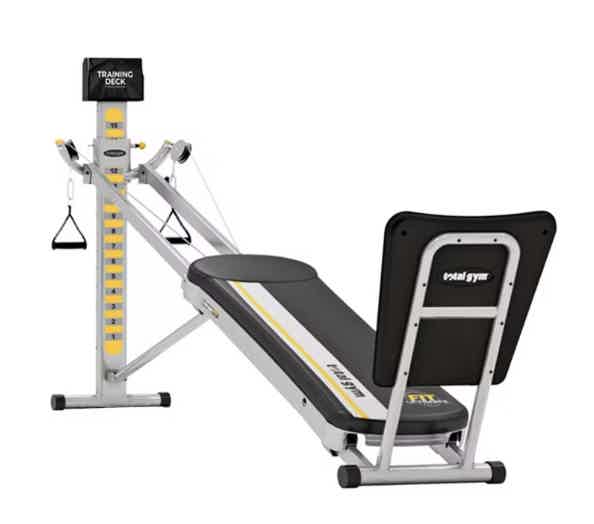
The VIP is equipment that allows precise measurement of Squat Load Tolerance — the percentage of your bodyweight your knee can accept during a squatting movement without producing pain, stiffness, or swelling.
A standard leg press cannot measure this accurately because it doesn't replicate the compressive forces of actual weight-bearing movement.
Common daily activities — sitting on a couch, standing from a desk chair, getting out of a car — require approximately 50% of your bodyweight in Squat Load Tolerance.
That number is a baseline for daily function, not necessarily the ultimate goal.
Three Mistakes People Make When They Focus Only on Muscle Strength
Mistake 1: Assuming That Improved Strength Means the Joint Is Ready for More Load
Muscles adapt faster than joint structures do. You can gain meaningful quadriceps strength in four to eight weeks. Cartilage adaptation operates on a longer timeline. Ramping up exercise intensity because your legs feel stronger — without checking whether your joint has kept pace — is how people end up in a pain cycle that seems to have no explanation.
Mistake 2: Interpreting Pain-Free Exercise as Safe Exercise
Because cartilage cannot signal pain in real time, "it didn't hurt during" is not sufficient evidence that the load was appropriate. Delayed symptoms — showing up 12 to 36 hours after exercise — are the more reliable signal. If knee soreness, stiffness, or swelling appears consistently the morning after an activity, your Load Tolerance has been exceeded. The exercise may have felt fine. The joint responded anyway.
Mistake 3: Resting When the Real Problem Is Unquantified Load
Rest reduces symptoms because it reduces load. But rest does not increase what your knee can tolerate. People who cycle between exercise flares and rest are often not doing anything wrong — they're just operating without an accurate measure of their current Load Tolerance. They don't know their floor. They can't set a ceiling. The result is guesswork, and guesswork produces inconsistent outcomes.
The Reframing Insight
Here is the counterintuitive part:
Stronger muscles, by themselves, do not protect your knee from overload.
The research on this is consistent enough to be humbling: muscle strength is associated with better pain outcomes in knee OA, but it does not reliably protect cartilage at the tibiofemoral joint.
And it certainly doesn't tell you whether your knee is ready for the load you're about to place on it today.
What protects your knee is the match between the load of your activities and your knee’s Load Tolerance.
When what you're asking of your knee stays within what your knee can currently absorb, it adapts.
When it doesn't, it reacts.
The question isn't whether your quadriceps are strong.
The question is whether the inside of your knee is ready.
Those are different questions.. and they require different tests.
And right now, most people only get an answer to one of them.
Frequently Asked Questions
Why does my knee hurt days after exercise if it felt fine at the time?
Cartilage, the load-bearing surface inside your knee joint, has no nerve supply. This means it cannot send a real-time pain signal when load exceeds what it can tolerate. The tissues surrounding the joint — the synovial membrane and nearby soft tissue — respond to that overload through inflammation, and that response produces the stiffness or soreness you feel hours or days later. Delayed knee pain after exercise is a predictable consequence of exceeding your knee's current Load Tolerance; it’s not a random event.
Can I have strong quadriceps and still have a knee problem?
Yes. Muscle strength and Knee Joint Strength are not the same measurement. A 2009 study published in Arthritis & Rheumatism followed 265 adults with knee OA over 30 months and found that greater quadriceps strength had no protective effect against cartilage loss at the tibiofemoral joint. Your quadriceps determine whether you can perform a movement. The internal structures of your knee — your cartilage and synovial fluid — determine whether your joint can absorb that movement without producing symptoms.
What is Squat Load Tolerance and why does it matter?
Squat Load Tolerance is the percentage of your bodyweight your knee can accept during a squatting movement without producing pain, stiffness, or swelling. It is a measure of internal knee capacity, not necessarily muscle output. Most daily activities — including sitting down on a couch or standing from a chair — require approximately 50% Squat Load Tolerance. The Variable Incline Plane (VIP) is designed specifically to measure this number accurately under real weight-bearing conditions, which a standard leg press cannot replicate.
What is the Inside Out Knee Health approach and how does it address this?
Inside Out Knee Health is a three-phase approach that addresses the internal joint environment before adding muscular load. Phase one focuses on improving synovial fluid quality and reducing irritation inside the joint. Phase two builds Knee Joint Strength and Squat Load Tolerance through precisely dosed, pain-free loading using the VIP. Phase three adds muscular strengthening of the external structures and returns the person to functional activities. This sequence matters because muscles adapt faster than cartilage. Introducing significant muscle-strengthening load before phase two is complete often overloads a joint that isn't yet prepared to absorb it.
How do I know if my knee's Load Tolerance is the real issue?
A few patterns suggest Load Tolerance is the limiting factor rather than general fitness or muscle weakness. If your knee pain shows up hours or days after exercise rather than during it, that delayed signal is characteristic of cartilage overload. If your symptoms fluctuate despite consistent effort, and you can't identify a clear cause, the missing variable is usually an accurate measure of how much load your knee can currently handle. See Why Knee Pain Shows Up After Exercise (Even When It Feels Fine at the Time) for a full explanation of this pattern.
Is walking or biking good for building knee Load Tolerance?
Both can be, at the right dose. The key variable is always whether the load stays within your current tolerance. Walking and biking that consistently produce delayed symptoms have exceeded it; walking and biking at or near your threshold build it.
For walking specifically, see This Type of Walking Can Actually Soothe Knee Pain for a practical guide to identifying your baseline and progressing it safely. And for questions about biking, see Is Biking Good for Knee Pain? Why Peloton May Aggravate Your Knee — And How to Fix It to understand the difference between cycling that overloads versus cycling that strengthens knee joints.
Related Articles
Is Biking Good for Knee Pain? Why Peloton May Aggravate Your Knee — And How to Fix It
Why Knee Pain Shows Up After Exercise (Even When It Feels Fine at the Time)
Why Your Knee Hurts the Day After Hiking (And What It Actually Means)
The Truth about the NYTimes “Knee Workout” Everyone’s Talking About
Why Your Knee Pain Keeps Coming Back – regardless of what you do
What Is Load Tolerance? The Missing Link in Solving Knee Pain
Research References
Hegde DD, Hadya Ananda K, Vavachan N. Effectiveness of Quadriceps Strength Training in Adults With Knee Osteoarthritis: A Systematized Review. Musculoskeletal Care. 2025 Jun;23(2):e70134. doi: 10.1002/msc.70134. PMID: 40462206.
Chang LR, Marston G, Martin A. Anatomy, Cartilage. 2022 Oct 17. In: StatPearls [Internet]. Treasure Island (FL): StatPearls Publishing; 2026 Jan–. PMID: 30422559.
Amin S, Baker K, Niu J, Clancy M, Goggins J, Guermazi A, Grigoryan M, Hunter DJ, Felson DT. Quadriceps strength and the risk of cartilage loss and symptom progression in knee osteoarthritis. Arthritis Rheum. 2009 Jan;60(1):189-98. doi: 10.1002/art.24182. PMID: 19116936; PMCID: PMC3653642.
For Inside Out Knee Health,
here's a guide to get started:
You can access it here.
For personalized guidance to build Better Knees:
Schedule a free 20-minute Strategy Session. (Find your best time here.)
Disclaimer: Disclaimer: The information in this blog post is for educational and informational purposes only and is not intended as medical advice. It should not be used to diagnose, treat, or prevent any health issue or disease without consulting with a qualified healthcare professional. The author of this blog and the website do not bear any responsibility for any actions taken based on the information provided in this blog.
Related Posts

Why Muscle Strengthening Helps Some Knees and Hurts Others
Strengthening helps some knees and irritates others because the key factor is load tolerance—not effort, form, or willpower.

Why Taking the Uber Instead of Walking Might Be the Smartest Thing You Do for Your Knees
More walking isn’t always better for sore knees. Learn when taking the Uber, choosing the elevator, or pacing a trip can protect knee load tolerance.

Why Your Knee Feels Puffier Some Days Than Others (And How to Track It)
Some knee swelling isn’t random—it’s a delayed joint response. Learn why your knee looks puffier some days and how to track it with simple measurements.