
There's a version of this story that plays out more often than most people realize.
Someone has been managing knee pain for years.
They've tried physical therapy, taken anti-inflammatories, maybe even gotten injections.
They've watched the videos, done the exercises, and tried to stay positive about it.
And the knee is still a problem.
The default explanation is that their knee is just "too far gone."
Or that they waited too long.
Or that they need surgery.
Sometimes those things are true.
But often, what's actually happening is simpler and more mechanical: the knee is being asked to do more than it can currently handle, every single day.
And there's never enough of a recovery window for anything to actually change.
This is the Load Tolerance problem.
What Load Tolerance Actually Means
Load Tolerance isn't a complicated concept.
It's the amount of force your knee joint can absorb and recover from without triggering pain, inflammation, or further damage.
Every activity places demand on the knee.
Getting out of a chair. Walking across a parking lot. Climbing stairs.
These aren't extreme activities, but they each require a certain percentage of bodyweight load through the joint.
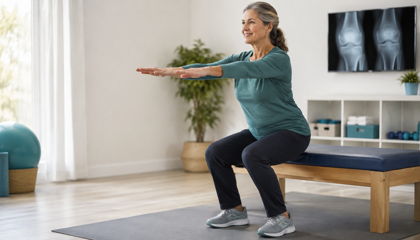
Sitting down from a standing position, for example, requires at least 50% of bodyweight in Squat Load Tolerance just to do it without compensating.
When your knee's Load Tolerance is low, these normal daily activities can exceed its capacity.
The knee responds with swelling, pain, and the kind of morning stiffness that requires several minutes of walking around before things feel normal.
That swelling isn't random – it's the joint's signal that it was overloaded.
The problem compounds when a person's daily life includes work or physical demands that stay consistently above that threshold.
The knee never gets below the line.
It never gets the recovery window it needs to improve.
The Bank Account Your Knee Keeps Overdrafting
Think of your knee like a bank account.
Every time you load it, you make a withdrawal.
Every time you rest, reduce inflammation, and move within your tolerance, you make a deposit.
Healing happens when the deposits exceed the withdrawals over time.
Most people with chronic knee pain are stuck in overdraft.
They're not making bad decisions, necessarily. They're just making unavoidable ones.
Work has physical demands. Life has physical demands.
And when those demands consistently pull more from the account than recovery can put back in, the balance stays negative.
This matters because it changes how you interpret treatment outcomes.
When viscosupplementation injections don't seem to work, the first question worth asking isn't "were they the wrong treatment?"
It's "were the right things occurring afterward for the treatment to actually take effect?"
Viscosupplementation like hyaluronic acid (HA) injections is designed to improve synovial fluid quality and reduce friction inside the joint.
But if the knee is immediately returned to high-load activity, the mechanical environment that made the joint painful in the first place reasserts itself quickly.
This is consistent with what the research shows about HA injection outcomes.
Studies suggest that patient activity levels and adherence to post-injection rest protocols significantly affect results.
The injection itself is only part of the equation.
So we developed a guide:
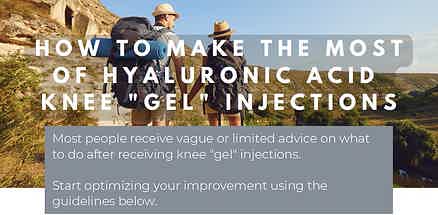
You can access it here.
How the Inside Out Knee Health Framework Addresses This
The Inside Out Knee Health approach is built around the understanding that the joint environment has to change before meaningful structural improvement can happen.
Phase 1: Improve synovial fluid quality.
Reduce the irritation and inflammation inside the knee.
Get the joint out of a reactive state so that Phase 2 work doesn't immediately re-trigger that reaction.
Phase 2: Improve knee joint Load Tolerance.
Build the knee's capacity to handle progressively more load without pain.
This is incremental, and it depends on Phase 1 being established first.
Phase 3: Strengthen external structures.
Once the knee joint can handle it, build the muscles around the knee so they can absorb and distribute force more effectively.
The Variable Incline Plane (VIP) is the tool used to measure where someone is in this process.
It measures Squat Load Tolerance, the percentage of body weight a person can move through without pain.
And it tracks progress in a way that muscle strength tests cannot.
Knee Joint Strength comes before muscle strength, and it's less visible.
Most people don't know their knee is improving until the numbers show it.
This framework works.
But it has a prerequisite:
The knee doesn’t need complete rest, but it needs enough of a recovery window to move through the phases.
If daily activity consistently overloads the joint faster than Phase 1 can establish a calmer environment, progress stalls.
Mistakes People Make When Knee Pain Isn't Improving
Mistake 1: Treating the Symptom Without Addressing the Load
Pain relief and load management are not the same thing. Anti-inflammatories, injections, and massage can reduce the experience of pain without changing the underlying load equation. If the knee is still being overloaded, those interventions are managing the output of the problem, not the problem itself. This isn't an argument against those tools. It's an argument for using them alongside honest load assessment.
Mistake 2: Not Resting After Injections
This one is more common than most people admit, because life doesn't pause for recovery. But viscosupplementation and other injectable treatments have a window after administration where the knee needs reduced load to respond well. Returning to high physical demand the same day, or the next morning, significantly reduces the likelihood that the injection will produce noticeable benefit. If a first round didn't work, the first question to ask your physician is whether sufficient rest was possible afterward.
Mistake 3: Assuming Muscle Strength Equals Joint Readiness
Someone can be genuinely strong, have good muscle mass, train regularly, and still have a knee that can't tolerate the loads their activities require. Muscle strength and Knee Joint Strength are not the same thing. The joint's capacity to absorb and distribute load depends on the internal environment, the quality of the synovial fluid, the state of the cartilage, and the degree of inflammation present. None of that shows up in a squat rack.
For Inside Out Knee Health,
here's a guide to get started:
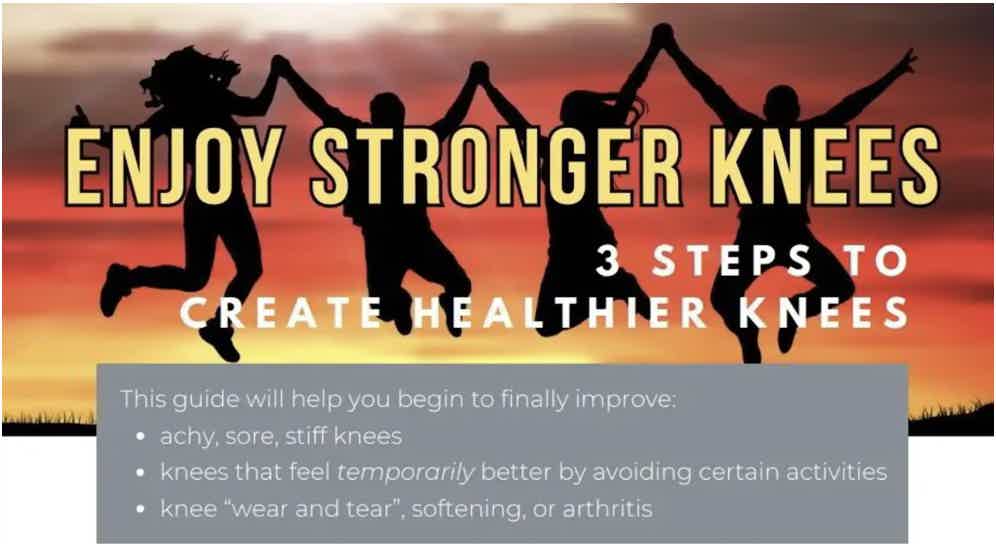
You can access it here.
The Reframing Insight
Here's the thing that most treatment conversations get backwards.
We tend to think of the goal as "fixing the knee."
But for many people with chronic knee pain, the more useful question is: "What does my life currently require from my knee, and can my knee's current capacity meet that requirement?"
That framing changes everything. It makes the path forward clearer.
If the answer is yes, a structured approach can close the gap.
If the answer is no, the first task is figuring out how to reduce the demand, not how to increase the tolerance faster.
An unloader brace doesn't fix a knee.
But it can reduce the force on the most damaged compartment during high-demand activities.
That reduction changes the daily withdrawal amount.
Which changes what becomes possible.
The goal isn't to get the knee to handle everything at once.
It's to create enough of a margin that the joint can begin to recover.
Frequently Asked Questions
Can a knee heal if I can't reduce my activity level?
In some cases, yes, but the process is slower and the outcomes are more limited. The joint environment can shift even under ongoing load if the load is below the threshold that triggers inflammation. The challenge is that the threshold is often lower than people expect, and daily activities that seem moderate can exceed it. An honest assessment of your Squat Load Tolerance compared to your activity demands is a useful starting point.
What is Squat Load Tolerance and why does it matter?
Squat Load Tolerance is the percentage of bodyweight a person can move through a squat pattern without triggering knee pain. It's a direct measurement of how much load the knee joint can currently handle. Getting out of a chair, standing from a car seat, and walking down stairs all require a minimum threshold of Squat Load Tolerance. When that threshold is below what daily life requires, the knee is consistently overloaded.
Why didn't my injections work?
Injection outcomes depend on several factors, including the type of injection, the condition of the knee, and what happened in the days after the injection. Viscosupplementation (like Euflexa or Synvisc) works by improving fluid quality inside the joint, but that improvement needs time to establish before the knee returns to high demand. Inadequate rest after injection is one of the most common reasons for poor outcomes. It's worth discussing with your physician whether a repeat course with a structured rest protocol might produce better results.
What is an unloader brace and who is it for?
An unloader brace is a custom-fitted device that shifts load away from the most damaged compartment of the knee, typically the medial (inner) compartment in people with medial compartment osteoarthritis. It's not a substitute for addressing the underlying joint environment, but it can reduce the daily load on the most symptomatic area, which may help manage pain and slow degeneration during periods of unavoidable high activity. It requires a prescription and fitting by a specialist.
Is knee replacement inevitable with severe arthritis?
Not always, though it depends significantly on the severity of inflammation, structural damage and the degree to which load can be managed. For knees with advanced osteoarthritis and no ability to reduce activity, replacement is often the most practical path forward. For people who have more control over their load levels, a structured approach to the joint environment can delay or sometimes avoid replacement. The honest answer is that it varies considerably by individual.
What's the difference between knee joint strength and muscle strength?
Muscle strength refers to the force-producing capacity of the muscles around the knee, primarily the quadriceps, hamstrings, and hip stabilizers. Knee Joint Strength refers to the joint's internal capacity to absorb and distribute load without triggering pain or damage, which depends on synovial fluid quality, cartilage condition, and the degree of inflammation present. A person can have strong muscles and still have poor Knee Joint Strength. Building muscle before addressing the joint environment can actually increase pain by adding more load before the joint is ready.
How do I know if the Inside Out Knee Health approach is right for me?
The approach works best when there's enough flexibility in your activity level to allow Phase 1 to establish a calmer joint environment. If your daily life, work, or obligations require consistent high-load activity on the knee that can't be meaningfully reduced, progress will be slow and results limited. A Strategy Session can help clarify whether your situation and the approach are a good match before committing to a program.
Related Articles
What Is Load Tolerance? The Missing Link in Solving Knee Pain
Why Your Knees Hurt on Stairs but Not When You Walk: What Actually Helps
When Stronger Muscles Don’t Help Knee Pain — Here’s What Does
Why Most Knee Braces Don’t Stop Knee Pain – and why this one might
Research References
Peck J, Slovek A, Miro P, Vij N, Traube B, Lee C, Berger AA, Kassem H, Kaye AD, Sherman WF, Abd-Elsayed A. A Comprehensive Review of Viscosupplementation in Osteoarthritis of the Knee. Orthop Rev (Pavia). 2021 Jul 10;13(2):25549. doi: 10.52965/001c.25549. PMID: 34745480; PMCID: PMC8567800.
Peters H, Rockel JS, Little CB, Kapoor M. Synovial fluid as a complex molecular pool contributing to knee osteoarthritis. Nat Rev Rheumatol. 2025 Aug;21(8):447-464. doi: 10.1038/s41584-025-01271-4. Epub 2025 Jul 7. PMID: 40624394.
For Inside Out Knee Health,
here's a guide to get started:
You can access it here.
For personalized guidance to build Better Knees:
Schedule a free 20-minute Strategy Session. (Find your best time here.)
Disclaimer: Disclaimer: The information in this blog post is for educational and informational purposes only and is not intended as medical advice. It should not be used to diagnose, treat, or prevent any health issue or disease without consulting with a qualified healthcare professional. The author of this blog and the website do not bear any responsibility for any actions taken based on the information provided in this blog.
Related Posts
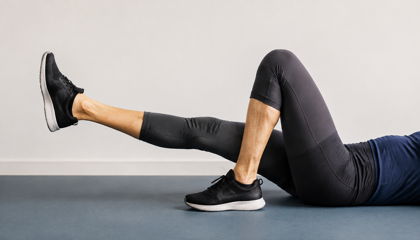
Strong Glutes Won't Fix Your Knee Arthritis (What to Do Instead)
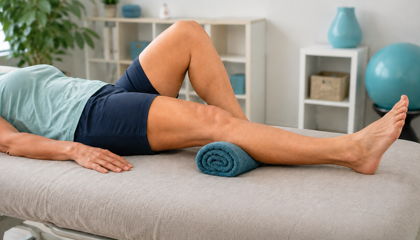
What Quad Sets Are Actually Doing For Your Knee
Quad sets don’t build strength by fatigue—they help calm irritation, improve quad activation, and prepare your knee for stronger loading.
Why Your Orthopedist Said "Nothing Will Change" Your Knee
A knee X-ray can show arthritis, but it can’t explain all knee pain. Learn why pain and radiographic severity often don’t match—and what tissue may actually be involved.