Better Knees
Home
About
Blog
Videos
Contact
Testimonials
WORK WITH ME
Hiker with backpack climbs a steep rock face beside a small waterfall in a green canyon.
Better Knees Blog/Inside Out Knee Health/5 min read

Why Most Knee Braces Don’t Stop Knee Pain – and why this one might

By Laurie Kertz Kelly

Millions of people with knee pain have tried wearing a knee brace.  


And research indicates that a soft knee brace will often decrease knee pain and improve your confidence during activities. (source)


However, a typical knee brace is less likely to prevent the knee pain, swelling, or stiffness that you may get afterwards – later that day or even the following day.  


This is because most knee braces don’t address the underlying knee problem.

What’s the underlying knee problem?

If you have knee pain, but your knees feel better:


  • when you press down on the arm rests as you’re standing up from a chair,
  • when you use hiking poles as you walk on challenging trails, or
  • when you’re walking in a pool,


then, you probably have a Load Tolerance problem.  


Load Tolerance is the amount of pain-free force your knee can produce or absorb for a specific movement, over a certain period of time, while still controlling that movement. 


Rather than determining muscle strength – which most trainers and physical therapists measure – Load Tolerance reveals the strength inside your knees.  


When the inside of your knees are strong, your Load Tolerance will be high.  


And when your Load Tolerance is greater than what your activities require, your knees feel good.  


Or in some cases, you may not even think about your knees. 


On the other hand, when the inside of your knees are weak, your Load Tolerance will be low.


When your Load Tolerance is lower than what your activities require, you’ll get knee symptoms – such as pain, soreness, stiffness, or swelling.

How to Make Your Knees Feel Better 

Knee pain and symptoms occur when there’s a mismatch between your knee strength and the strength required by your activities.   


I often compare knee pain to having a bank account that is in debt.  


Getting out of debt requires a combination of more deposits and fewer withdrawals.  


Likewise, you can avoid knee pain if you: 


  • increase your knee strength, 


  • decrease the difficulty of your activities, or


  • a combination of both.


I help my clients improve their knee strength (which I’ve written about here) by increasing the health of their synovial fluid and the strength of the cartilage, both located inside their knees.  


But building strength inside your knees doesn’t happen instantaneously.  


So I also provide recommendations that decrease the difficulty of your activities.  


If you have pain with challenging hikes, I may suggest that you temporarily stick to flatter trails. 


I may also recommend that you use hiking poles.  


Both of these recommendations often decrease knee pain.


Because your activity now requires less Load Tolerance from your knees.

Can a knee brace increase your knee strength?

Knee braces don’t change your Load Tolerance.


They won’t make the inside of your knees stronger.  


And unlike hiking poles, most knee braces won’t make it easier to climb or descend a challenging trail.  


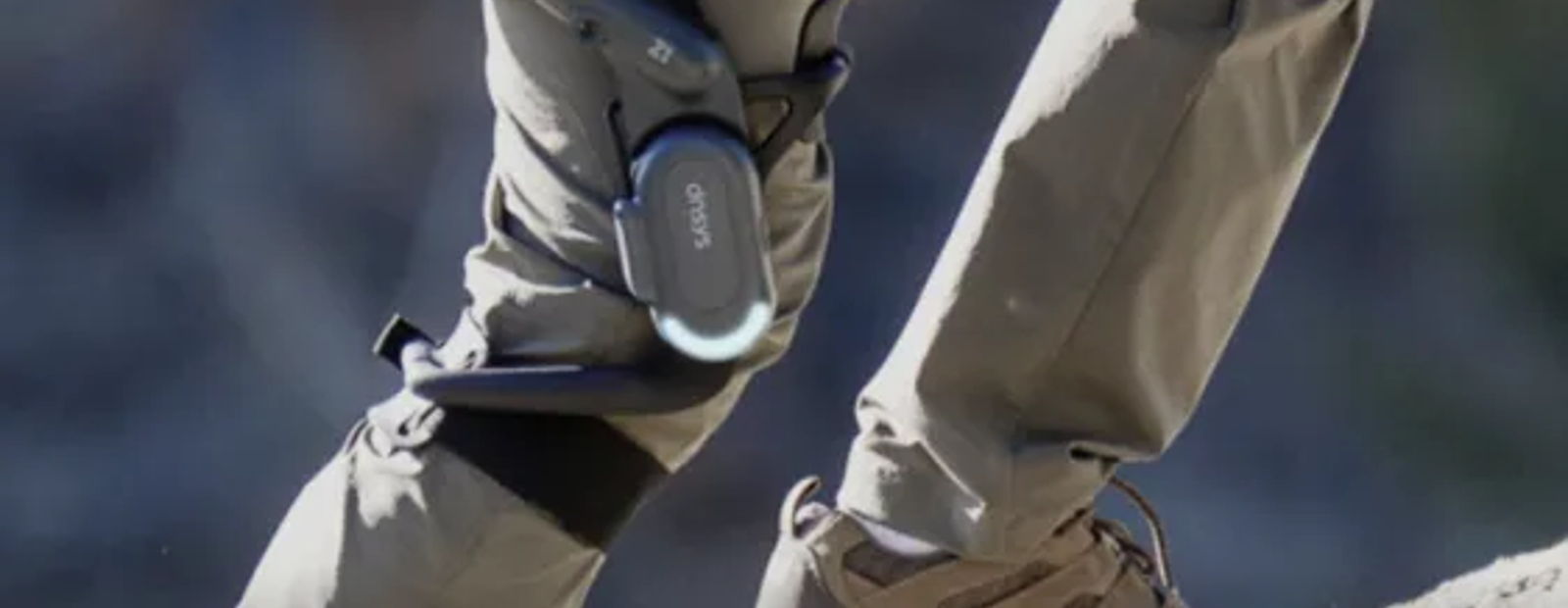
So when I learned about the Dnsys Z1 – a knee brace that offers assistance and makes activities easier – I was intrigued.

(source)


The small motor on the side of the brace (what they call an exoskeleton) delivers force to the back of the thigh and calf. 


This assistive force provides two benefits: 


  1. support when climbing stairs or trails, or even when rising from a chair

  2. cushion and shock absorption during descents and impact activities


It won’t make your knees stronger, but rather it’s designed to make activities easier.


If it makes your activities easy enough – if the demand from your activities is lower than your current Load Tolerance – you may be able to do more and hurt less.  


Note: I haven’t tried the Dnsys Z1 myself,

nor do I have any financial benefit 

from sharing it with you. 


I’m not sure the Dnsys Z1 will live up to the hype of empowering you to do “anything, anytime, anywhere” like their video promotes. (source) 


But it certainly sounds like it may offer support as you take the action necessary to increase your Load Tolerance – as you build Better Knees and achieve Inside Out Knee Health.

Key Takeaways:

  • Soft knee braces can reduce knee pain and boost confidence during activities, but they don’t prevent symptoms that appear later because they don’t address the underlying issue.

  • The real issue is Load Tolerance — your knee’s ability to handle and control force during activity.

  • Load Tolerance reveals the strength inside your knees (synovial fluid and cartilage health).

  • Avoid knee pain by increasing internal knee strength and/or reducing the difficulty of your activities.

  • The Dnsys Z1, a powered exoskeleton knee brace, is designed to provide assistive force to make activities easier, potentially reducing knee pain while you build true knee strength from the inside.

Related Articles

  • What Is Load Tolerance? The Missing Link in Solving Knee Pain

For Inside Out Knee Health,

here's a guide to get started:

You can access it here. 


For personalized guidance to build Better Knees:

Schedule a free 20-minute Strategy Session.  (Find your best time here.)


Disclaimer: The information in this blog post is for educational and informational purposes only and is not intended as medical advice. It should not be used to diagnose, treat, or prevent any health issue or disease without consulting with a qualified healthcare professional. The author of this blog and the website do not bear any responsibility for any actions taken based on the information provided in this blog.

Disclaimer: Disclaimer: The information in this blog post is for educational and informational purposes only and is not intended as medical advice. It should not be used to diagnose, treat, or prevent any health issue or disease without consulting with a qualified healthcare professional. The author of this blog and the website do not bear any responsibility for any actions taken based on the information provided in this blog.

Share

Related Posts

My Shoulder Hurt for Months — Then I Did a Pull-Up. Here's What That Has to Do With Your Knees.

My Shoulder Hurt for Months — Then I Did a Pull-Up. Here's What That Has to Do With Your Knees.

The body often adapts before symptoms improve, which is why people quit their recovery too early. Tracking objective measurements like knee joint Load Tolerance helps bridge the gap between what you feel and what is actually changing. This is the foundation of the Insid

PRP for Knee Pain: An Honest Look at the Evidence

PRP for Knee Pain: An Honest Look at the Evidence

PRP (Platelet-Rich Plasma) injections are among the most debated treatments for knee osteoarthritis. Research suggests PRP can reduce pain and improve function — but platelet dose, preparation protocol, and patient selection significantly affect outcomes. Most important

Why Daily Exercise Won't Necessarily Help You Avoid a Knee Replacement

Why Daily Exercise Won't Necessarily Help You Avoid a Knee Replacement

Daily exercise improves circulation and muscle endurance, but it doesn

About Us
About
Contact
Work with me
Resources
Blog
Videos
Testimonials

Austin, Texas & online worldwide - Phone: 512-394-4722

© 2025 Kertz Coaching, LLC. All Rights Reserved | Privacy Policy | Terms