
She was hauling irrigation hoses across uneven ground — not unusual, not extreme.
And afterward, her knees felt like she'd fallen and scraped them on concrete.
The burning was right on the surface.
Just under the skin, she said.
Not deep inside the joint.
Not the grinding ache she'd learned to expect.
This description comes up more often than most people realize.
And it almost always prompts the same question: Is that even a thing?
It is. And understanding why it happens is one of the most useful things you can learn about knee pain at this stage.
Why Your Knee Feels Like It's Been Scraped
The knee joint is lined with a thin layer of tissue called the synovial membrane (synovium).
Its primary job is to produce synovial fluid — with a lubricant that cushions and nourishes the cartilage inside the joint.
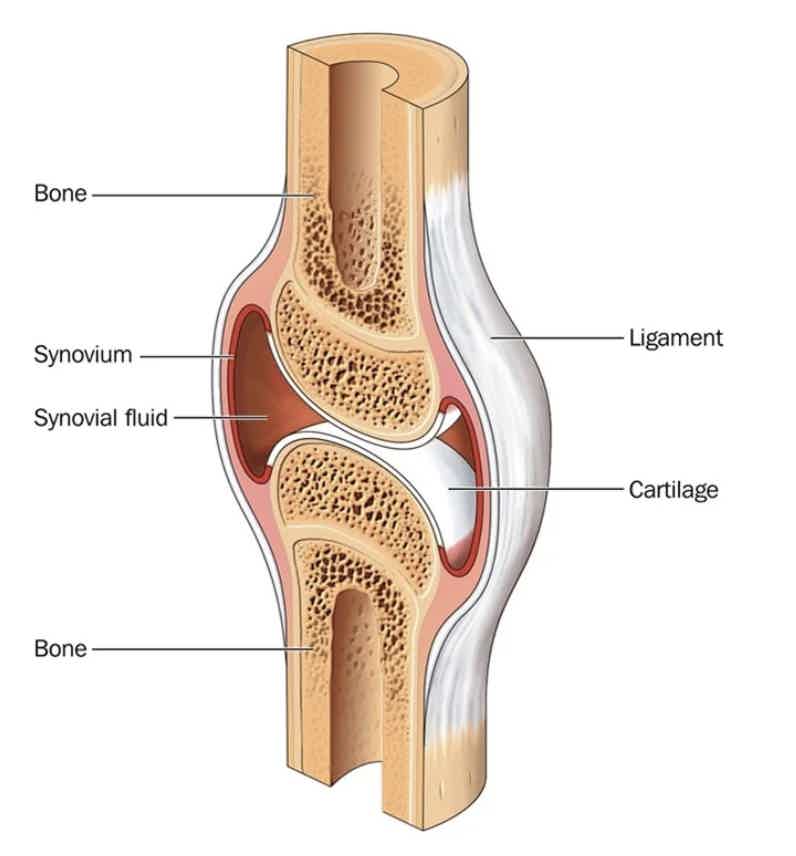
What most people don't know is that the synovial membrane (synovium) has a nerve supply.
These nerves are there to monitor the joint environment and, when needed, signal distress.
When your cartilage is soft, thin, or lacking adequate Load Tolerance, activities that seem moderate from the outside can create microscopic damage at the cartilage surface.
The joint lining detects that disruption and responds with inflammation.
And that inflammation produces a very specific sensation: a burning feeling that seems to come from just under the skin, right at or near the kneecap.
It's not imaginary.
It's the joint lining doing what it's designed to do.
The problem is the mismatch: the activity that caused it didn't feel like too much.
Hauling hoses. Walking on uneven ground. Getting up from a chair.
These aren't activities we associate with joint damage.
But when cartilage doesn’t have adequate Load Tolerance, the threshold for that kind of inflammatory response is low.
Knee Cartilage Can Get Stronger
There's a distinction worth making here.
Cartilage can't get "stronger" the way a hamstring or other muscles get stronger.
What it can develop is Load Tolerance — the ability to absorb, distribute, and recover from compressive force without triggering an inflammatory cascade.
When cartilage lacks that tolerance, it behaves more like a sponge that's been overworked.
It can't hold its shape under load.
It shears, compresses beyond its capacity, and the surface cells take the damage.
That damage signals the synovial lining.
The lining inflames.
The burning begins.
The goal of early-stage knee rehabilitation isn't to load the cartilage hard and fast.
It's to gradually expand what the cartilage can tolerate — starting by improving the joint environment itself.
This is where the Inside Out Knee Health framework begins.
Phase 1: Improve the internal joint environment.
Reduce joint lining (synovium) irritation and restore synovial fluid quality.
Phase 2: Build Knee Joint Load Tolerance.
Help the cartilage handle progressively more force without reacting.
Phase 3: Strengthen external structures and expand into functional movement.
That burning sensation is almost always a Phase 1 signal.
The joint environment isn't ready yet.
And skipping past it — trying to strengthen muscles first, load more first — keeps the lining inflamed and makes everything harder.
Why Knee Circumference Matters More Than You Think
One of the first things we track with new clients is knee circumference — a simple tape measure reading above and below the kneecap, taken in the morning and compared over time.
This is a proxy for fluid volume inside the joint.
When the synovial lining is irritated, it overproduces fluid.
That fluid is thinner and more watery than healthy synovial fluid — it's high in volume, low in quality.
The joint swells.
And you'll often see that reflected in the circumference measurement, even before you notice it visually.
As the joint environment improves — as irritation decreases and fluid quality goes up — the volume comes down.
Circumference shrinks.
A centimeter of change in ten days, on a joint that didn't appear swollen, is meaningful.
It's evidence that something real is happening inside — before the person necessarily feels it.
Research supports this connection: reduced synovial fluid inflammation correlates with reduced pain and improved joint function.
Studies examining synovial fluid viscosity have found that better fluid quality is associated with less pain and improved joint mechanics.
For Inside Out Knee Health,
here's a guide to get started:
You can access it here.
Three Mistakes People Make When their Knee Burns Like This
Mistake 1: Assuming it's a nerve problem
The surface-level quality of the burning makes many people think they're dealing with a nerve issue — paresthesia, referred pain, or something neurological. Sometimes those possibilities need to be ruled out. But in the context of known osteoarthritis and recent overactivity, that burning sensation is almost always a synovial lining response. Treating it as a nerve problem sends you down the wrong path.
Mistake 2: Pushing through it
When the burn shows up after an activity, it's tempting to assume it means the area "needs work" and to keep loading it. That logic makes sense for muscle soreness. It's the opposite of what you want for a reactive joint lining. Continuing to overload inflamed synovial tissue prolongs the inflammation and delays the transition to Phase 2.
Mistake 3: Resting completely
The other extreme — stopping all movement — is equally counterproductive. The joint environment improves with gentle, rhythmic, non-loading movement. Sitting sliders, tailgaters, quad sets: these aren't placeholders. They're the actual intervention for Phase 1. They keep synovial fluid circulating without compressing the cartilage surface. Complete rest slows the recovery process down.
The Problem Wasn't the Yard Work — It Was the Timeline
Here's the contrarian read on this situation.
The yard work wasn't the mistake. It was yard work. Normal life.
The mistake was asking a Phase 1 joint to perform like a Phase 3 joint.
When the joint environment hasn't been stabilized, ordinary activities that would be completely fine at a different stage in the process cause overload.
The knee joint is not yet ready.
This is why "just move more" is incomplete advice.
Movement is essential — but the type, intensity, and sequencing of that movement has to match where the joint actually is.
Not where you wish it were.
The burning isn't necessarily a setback.
It's a sign that the knee joint is responding to load, which means the sensors are doing their job.
What it tells you is: not yet. Not this kind of load. Not at this stage.
That's useful information. Act on it.
Frequently Asked Questions
Why does my knee pain feel like it's on the surface of the skin?
That surface-level burning sensation is typically a sign of synovial membrane inflammation. The synovial membrane — the tissue lining the inside of the knee joint — contains sensory nerve fibers that detect and respond to joint disturbance. When cartilage surface cells are disrupted by overload, the lining reacts with inflammation that produces a burning sensation near the skin surface. Research has confirmed the presence of pain-transmitting nerve fibers in the human knee synovial membrane, including substance P-positive fibers closely involved in pain signaling.
Is this type of burning pain dangerous?
In the context of osteoarthritis and recent overactivity, no. It's uncomfortable and it's telling you to back off from that load level, but it's not structural damage in the way a ligament tear or fracture is. It's a joint lining response — inflammatory, not catastrophic. That said, sudden onset burning pain, especially after an injury, or pain accompanied by warmth, fever, or significant rapid swelling warrants evaluation.
Can I still exercise when my knee burns like this?
Yes — but the type of exercise matters. The goal during this phase is gentle, non-compressive movement that keeps synovial fluid circulating without adding load to the cartilage surface. Sitting Sliders (seated low-friction heel slides) and Quad Sets performed with low intensity are both appropriate. High-load activities (stairs, uneven terrain, extended walking) are best reduced until the burning settles and fluid volume decreases.
How do I know if my joint environment is actually improving?
The most accessible indicator is measuring knee circumference in the morning, above and below the kneecap, and tracked week to week. A consistent decrease suggests fluid volume is going down, which reflects improved fluid quality and reduced lining irritation. Clinically, we also look for a reduction in start-up stiffness (the pain that hits when you stand from a chair), improvement in how long it takes the knee to settle after activity, and eventually the ability to tolerate more load without the burning response returning.
What is synovial fluid and why does its quality matter?
Synovial fluid is the viscous, lubricating fluid produced by the synovial membrane inside the knee joint. It cushions the cartilage surface, reduces friction, and delivers nutrients to the cartilage cells (which have no direct blood supply). In arthritic joints, the fluid often becomes thinner and more watery — higher in inflammatory markers and lower in the hyaluronic acid content that gives it its cushioning properties. Research on viscosupplementation has found that improvements in synovial fluid viscosity correlate with reductions in pain and improved joint function, supporting the idea that fluid quality directly affects how the knee feels and performs.
Will this burning pain go away?
For most people in Phase 1, yes — when the load is appropriately managed and the joint environment improves. The timeline varies. In clients who are consistent with their Phase 1 work, we often see meaningful changes in circumference within two to three weeks, and the surface-level burning usually decreases as fluid volume and lining irritation come down. The burning tends to persist when the joint is repeatedly overloaded before it's ready, or when Phase 1 work is skipped in favor of jumping to strengthening.
What's the difference between knee joint strength and muscle strength?
Muscle strength and knee joint strength are related but not the same thing. You can have strong quadriceps and still have a knee joint with poor Load Tolerance — because Load Tolerance lives in the cartilage and the joint environment, not solely in the muscles. Knee Joint Strength refers to the joint's ability to accept and distribute compressive force without an inflammatory response. Muscle strength supports that — but it can't substitute for it. Building muscle without first improving the joint environment often makes symptoms worse, not better, because stronger muscles load an already-irritated joint more forcefully.
Related Articles
What Is Load Tolerance? The Missing Link in Solving Knee Pain
Why Your Knee Hurts the Day After Hiking (And What It Actually Means)
Why Your Knee Pain Keeps Coming Back – regardless of what you do
Why Your Knees Hurt on Stairs but Not When You Walk: What Actually Helps
Research References
Grönblad M, Korkala O, Liesi P, Karaharju E. Innervation of synovial membrane and meniscus. Acta Orthop Scand. 1985 Dec;56(6):484-6. doi: 10.3109/17453678508993040. PMID: 2418622.
Olivotto E, Trisolino G, Belluzzi E, Lazzaro A, Strazzari A, Pozzuoli A, Cigolotti A, Ruggieri P, Evangelista A, Ometto F, Stallone S, Goldring SR, Goldring MB, Ramonda R, Grigolo B, Favero M. Macroscopic Synovial Inflammation Correlates with Symptoms and Cartilage Lesions in Patients Undergoing Arthroscopic Partial Meniscectomy: A Clinical Study. J Clin Med. 2022 Jul 26;11(15):4330. doi: 10.3390/jcm11154330. PMID: 35893418; PMCID: PMC9330366.
Iordan DA, Coman MG, Hrisca-Eva OD, Stavrică-George A, Gherghin AC, Onu I. Enhanced Synovial Fluid Rheology in Moderate Knee Osteoarthritis Through Combined Intra-Articular Hyaluronic Acid and Multimodal Physiotherapy: A Monocentric Observational Study. J Clin Med. 2025 Aug 27;14(17):6051. doi: 10.3390/jcm14176051. PMID: 40943811; PMCID: PMC12429328.
Norte G, Rush J, Sherman D. Arthrogenic Muscle Inhibition: Best Evidence, Mechanisms, and Theory for Treating the Unseen in Clinical Rehabilitation. J Sport Rehabil. 2021 Dec 9;31(6):717-735. doi: 10.1123/jsr.2021-0139. PMID: 34883466.
Vincent HK, Percival SS, Conrad BP, Seay AN, Montero C, Vincent KR. Hyaluronic Acid (HA) Viscosupplementation on Synovial Fluid Inflammation in Knee Osteoarthritis: A Pilot Study. Open Orthop J. 2013 Sep 20;7:378-84. doi: 10.2174/1874325001307010378. PMID: 24093052; PMCID: PMC3788189.
For Inside Out Knee Health,
here's a guide to get started:
You can access it here.
For personalized guidance to build Better Knees:
Schedule a free 20-minute Strategy Session. (Find your best time here.)
Disclaimer: Disclaimer: The information in this blog post is for educational and informational purposes only and is not intended as medical advice. It should not be used to diagnose, treat, or prevent any health issue or disease without consulting with a qualified healthcare professional. The author of this blog and the website do not bear any responsibility for any actions taken based on the information provided in this blog.
Related Posts

Why Taking the Uber Instead of Walking Might Be the Smartest Thing You Do for Your Knees
More walking isn’t always better for sore knees. Learn when taking the Uber, choosing the elevator, or pacing a trip can protect knee load tolerance.

Why Your Knee Feels Puffier Some Days Than Others (And How to Track It)
Some knee swelling isn’t random—it’s a delayed joint response. Learn why your knee looks puffier some days and how to track it with simple measurements.

The Muscle-Strength Trap: What Hip and Core Work Really Does for Your Knee
Hip and core work can improve knee alignment and symptoms, but it does not build true knee load tolerance. That takes progressive loading.