SOUND
If you have an instrument– keyboard, harmonica, guitar– experiment with playing different sounds. Or sing along with some of your favorite songs.
Need inspiration?
Consider getting a pair of drum sticks and an empty bucket. Search YouTube for “bucket drumming.”
Join a group of friends for karaoke. Or search the internet for “best karaoke songs”, and then search YouTube for “<insert the name of a song> lyrics.”
SMELL / TASTE
Cooking doesn’t need to be a gourmet endeavor or involve a complicated recipe. Try preparing food with different textures (e.g., crunchy stir fry, soft pudding), or vary the tastes (e.g., sweet, salty, bitter). (If standing causes pain, perch on a tall stool and take frequent breaks.)
Need inspiration?
Search the internet for “<insert three ingredients you have on hand> recipe”.
TOUCH
Acquire some clay from a craft store to mold and shape. Or use a recipe like this one to make some at home. And if you’re feeling more adventurous, consider a simple knitting or crocheting project.
Need inspiration?
Local yarn shops often offer introduction to knitting or crocheting classes.
And if you know some families with young children, invite them over for a finger painting party.
Need something more cerebral?
Write a Haiku. Haikus are three-line poems with five syllables in the first line, seven syllables in the second line, and five syllables in the third line.
What at first feels strange
using sight, sound, taste, and touch
gently calms the pain.
As an Injury Recovery Coach, Heidi Armstrong, founder of the Injured Athlete’s Toolbox, also recommends creative expression, stating “Creativity is like an eject button for emotional and physical pain.”
She suggests people in pain set up “creativity stations” around their house if space allows. “So, maybe on one side of the dining room table, leave out some pens and paper to doodle. On the other end, leave out a puzzle. Then maybe somewhere else a watercolor station.”
Heidi recommends spending at least 20 minutes each day doing something creative. This can happen at one particular time or by breaking it up into 5-minute segments– what she refers to as creativity “snacks”– throughout the day.
Being creative won’t turn you into a cat– or any member of the animal kingdom that does not feel overwhelmed by all three aspects of pain. But such endeavors can diminish the amplifying effects of fears, doubts, and worries on the pain experience.
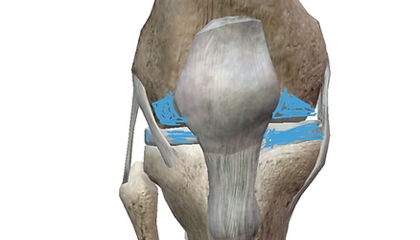
My colleague, Doug Kelsey, PT, PhD, and I have developed Better Knees for Life, a program for people with tolerable knee pain. Better Knees for Life offers step-by-step instructions that can be performed at home with very little equipment.
It helps you strengthen your knees from the inside-out (learn more about this approach by clicking here and here).
Better Knees for Life helps you get stronger, feel better and maybe best of all, feel more in control of your life.
What people are saying about Better Knees for Life :
"I've already recommended BKL to 2-3 friends because of the noticeable difference in reducing pain in my left knee."
"[I like] the exercise videos, and the frequent contact to keep up the motivation."
"Necessary for improving osteoarthritic knees."
"BKL (Better Knees for Life) is an outstanding program -- with graded exercise programs and guidelines for advancing, and outstanding support with the Zoom sessions."
"I wish I had started years ago."
Help your friends: share this article by clicking a button below.